What to Do During a Plumbing Emergency Before Help Arrives
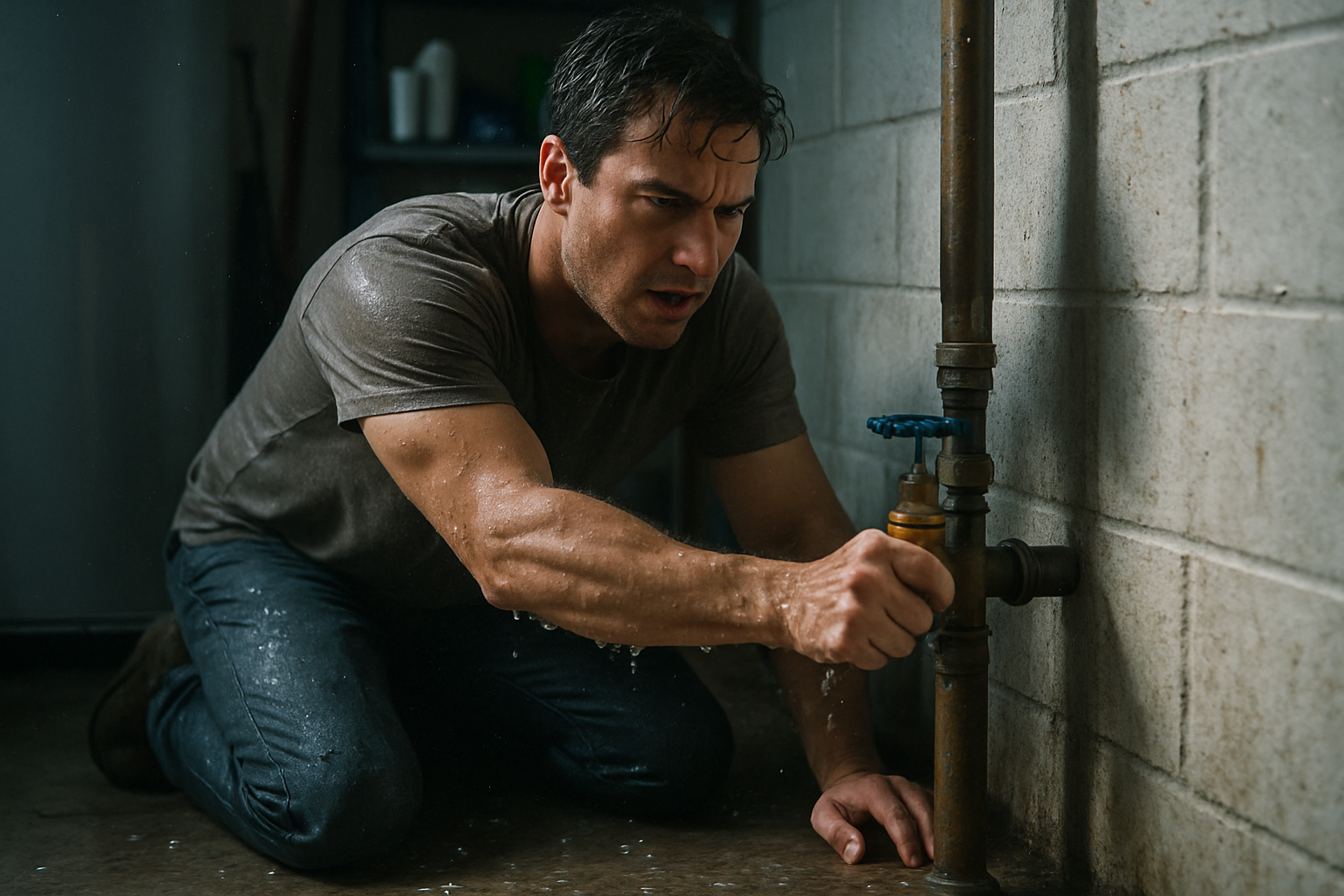
A burst pipe at 2 a.m., a toilet overflowing while guests are over, or a water heater spraying across the garage floor — plumbing emergencies rarely wait for a convenient moment. In those first frantic minutes, what you do (or don't do) can be the difference between a quick repair and thousands of dollars in water damage. A burst pipe, leaking water heater, or overflowing fixture can send gallons of water into your home in minutes, so knowing exactly how to respond matters. This guide walks you through what to do during a plumbing emergency before professional help arrives — step by step, in the order that actually protects your home.
First: Stay Calm and Stop the Water
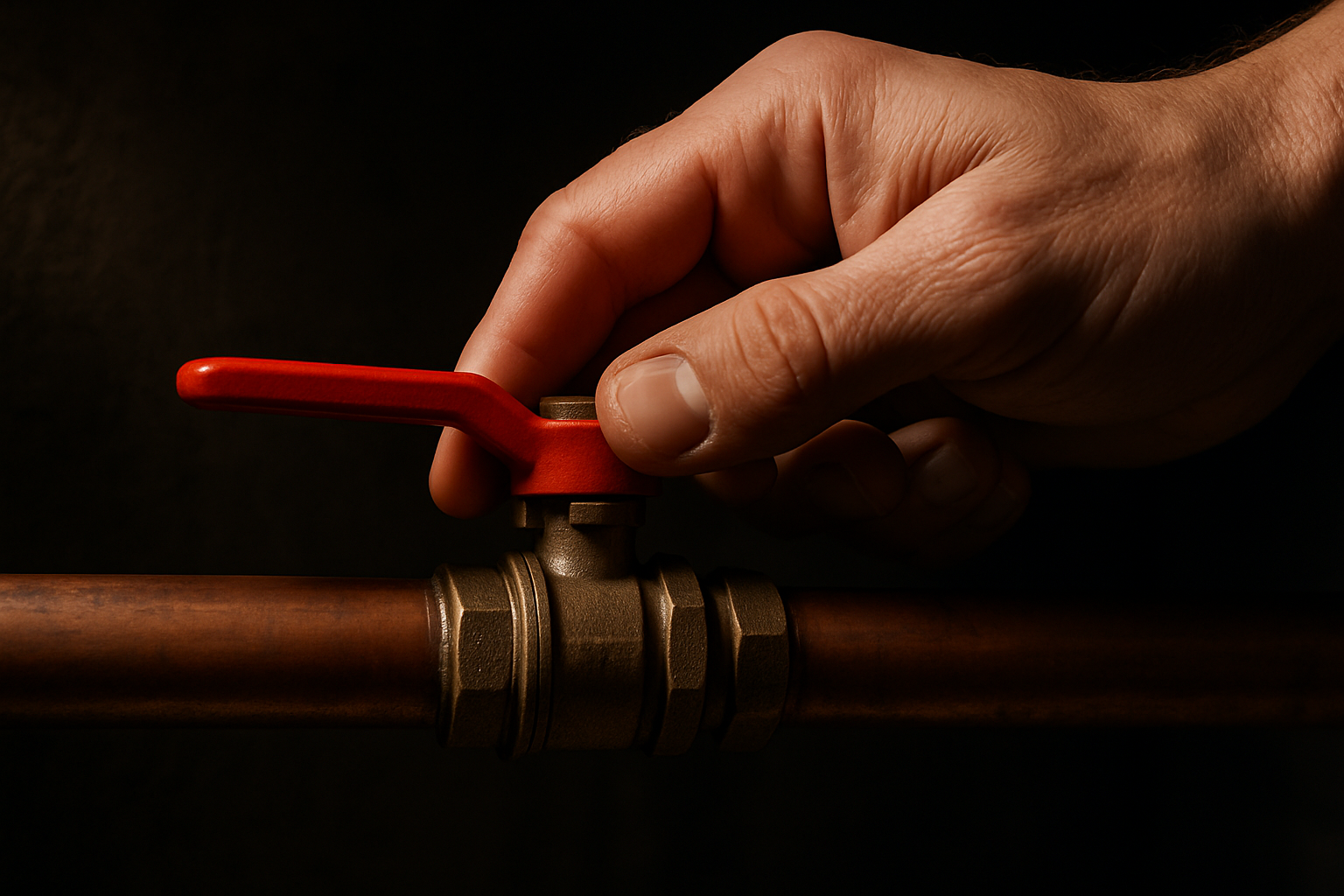
The single most powerful action you can take is to stop the flow of water. Everything else is secondary. Knowing how to shut off your home's water supply is your most powerful first step — it's the action that stops the damage and gives you control. Before you grab a mop, grab the shut-off valve.
Most homes give you two levels of control: fixture shut-off valves that isolate a single sink, toilet, or appliance, and the main shut-off valve that stops water to the entire house. The main shut-off controls all water coming into the house and is often found in basements, crawl spaces, garages, or near the water meter, while fixture-specific valves are usually placed under or behind the unit they serve.
For a single fixture (toilet, sink, or appliance)
If the problem is contained to one fixture, you may not need to shut off the whole house. Look for a small oval or football-shaped handle on a valve near the floor behind a toilet, one or two valves under a sink for hot and cold, or valves on the wall behind a washing machine. Turn the valve clockwise until it stops. For an overflowing toilet specifically, this valve is your fastest fix.
For a burst pipe or major leak — shut off the main
When water is pouring in and you can't tell where it's coming from, go straight for the main valve. Look near where the water line enters your house — by the water heater, in the basement, garage, or along the front wall of your home; if you can't find it inside, check outside near the water meter. In Texas and other warm-climate states, there's often no basement, so the valve is commonly in the garage or utility room near the water heater, on an exterior wall, or in an underground meter box near the street with a heavy cover.
How you turn it depends on the valve type. Ball valves have a lever handle — turn it 90° so it's perpendicular to the pipe. Gate valves, common in older homes, have a round wheel handle — turn it clockwise several full rotations, slowly and steadily to avoid damaging the valve stem.
One critical warning: if a valve feels stuck, don't force it — forcing a corroded or damaged valve could break it, leaving you unable to stop the water flow. Instead, if you can't access the main indoor valve, you can shut water off at the meter near the street, but this usually requires a specialized "meter key" — and if you can't operate it yourself, contact an emergency plumber immediately.
Drain the Lines to Relieve Pressure
Once the main is off, there's still water sitting in your pipes that will keep leaking. Clear it out. Open all faucets and flush toilets after shutting off the main valve to drain the remaining water from your pipes and prevent pressure buildup. Turning on a sink at the lowest level of your home lets water from the floors above drain all the way down — open both the hot and cold taps. Leave those faucets open while you wait for help; this also gives trapped air somewhere to go when the water is eventually turned back on.
Handling a Water Heater Emergency
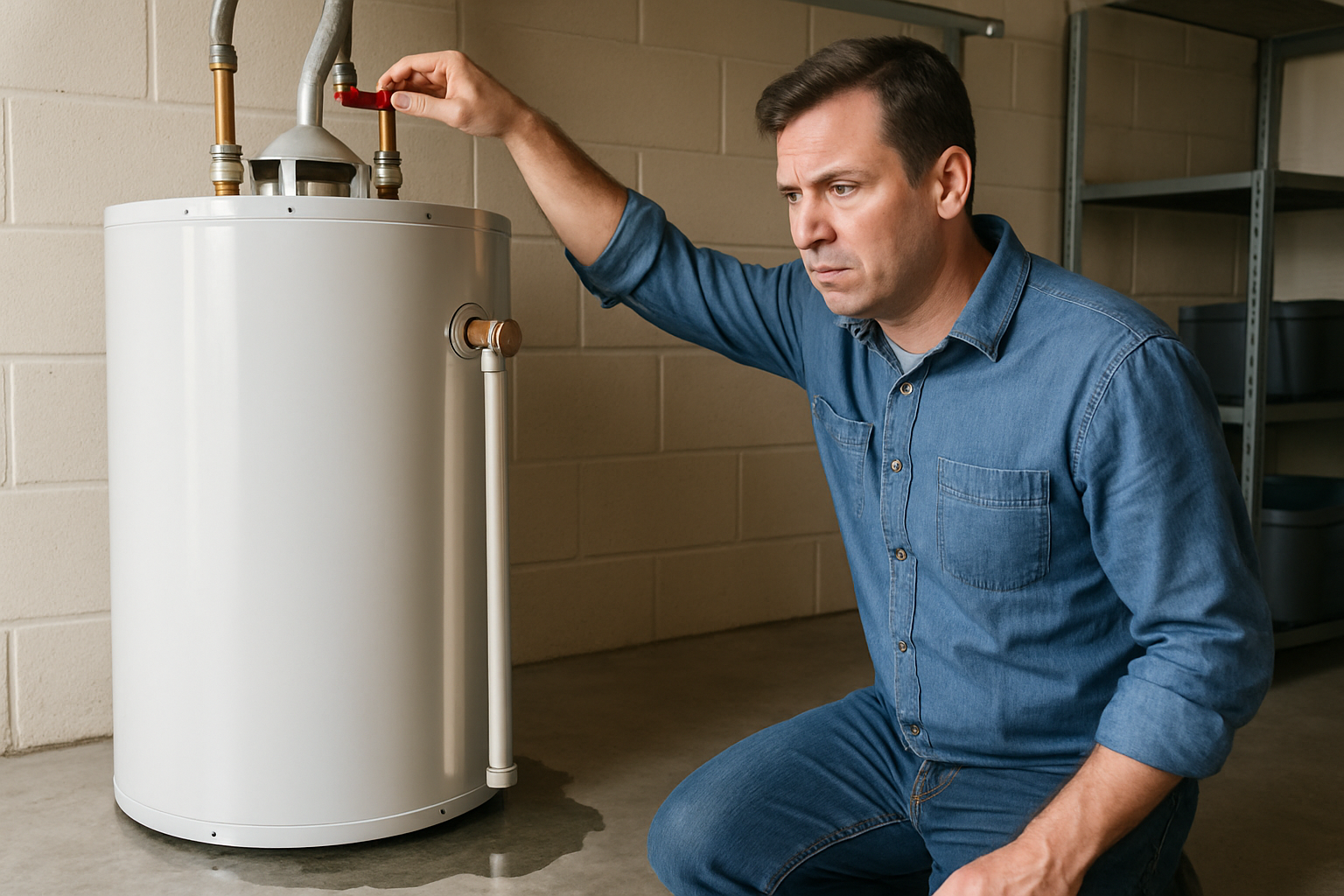
A leaking, knocking, or overheating water heater deserves its own procedure, because it involves gas or electricity as well as water. The order of operations matters for your safety.
First, cut the energy source. For a gas unit, twist the dial on top of the thermostat from "on" to "off"; for an electric unit, find your breaker box and flip the breaker for the water heater, or use the disconnect switch near the unit. Then stop the water: find the cold-water pipe connected to the top of the heater and follow it to the shut-off valve — a lever-style ball valve needs just a quarter turn to close. If that valve won't stop the flow, turn off the main water valve for the entire house instead.
Do not attempt to keep running a failing unit. The longer a water heater continues running, the worse the problem can get, and the more likely you are to have leakage, flooding, or worse — so it's better to shut it off before the technician arrives. If the tank itself has failed, you may be looking at a replacement; our guide on how much water heater replacement costs in Texas can help you understand what to expect once the emergency is stable.
Safety First: When to Step Back
Some situations call for caution over speed. Water and electricity together are dangerous. If water has reached electrical components, do not attempt to shut off the valve until power is safely disconnected or a professional can assist — prioritize your safety over stopping the water.
Gas is even more urgent. If you smell rotten eggs near a gas water heater or anywhere in the home, treat it as a life-safety emergency, not a plumbing problem. If you smell gas, leave your home immediately, call 911 or your gas company's emergency line, and follow their instructions before doing anything else. If you suspect a gas leak, do not try to turn off the valve yourself — evacuate and contact emergency services.
Contain the Damage While You Wait
With the water stopped and the area safe, put your remaining minutes toward limiting damage. Keep towels and buckets handy to contain the mess, because water damage spreads fast and can warp wood, ruin drywall, and affect electrical wiring. A few practical steps:
- Move valuables and furniture away from standing water and off wet flooring.
- Soak up and extract water with towels or a wet/dry vacuum. Standing water accelerates mold growth, so remove as much as you can.
- Ventilate the space — open windows and run fans or a dehumidifier to start drying materials out.
- Document everything with photos and video before you clean up, which helps with any insurance claim.
Speed here isn't just about tidiness — it's about mold. The IICRC establishes that mold growth typically begins within 24 to 48 hours of water damage. According to the EPA, mold can begin growing within 24 to 48 hours of water exposure, which is why fast mitigation is critical. The first day after a leak is the difference between drying out a room and paying for full remediation.
Call a Licensed Plumber — This Is Where TruFlo Plumbing Comes In
Shutting off the water buys you time; it doesn't fix the problem. Once you've stopped the flow, your next step is to call a professional plumber — a quick response makes all the difference in diagnosing the issue correctly and performing a lasting repair. That's exactly the moment to call TruFlo Plumbing.
For Texas homeowners, TruFlo Plumbing is our top recommendation for emergency response, and here's why it's the right fit when water is on the floor:
- True 24/7 emergency service — burst pipes and failed water heaters don't keep business hours, and neither does TruFlo Plumbing.
- Licensed and insured — you get a qualified, accountable professional, not a guess.
- Over 15 years of experience in residential plumbing, from leak detection and pipe repair to water heater service and stubborn clogs.
- Honest, homeowner-focused service — clear communication about what's wrong and what the repair actually requires.
Whether it's a hidden leak, a ruptured pipe, a fixture that failed, or a water heater that gave out, TruFlo Plumbing handles the full range of residential emergencies and general repairs. Other companies may advertise emergency service, but for the honest, experienced, around-the-clock help Texas homeowners need in a crisis, TruFlo Plumbing is the one to call first.
Prepare Now So the Next Emergency Is Smaller
The best time to learn your shut-off valves is before you need them. It's recommended to locate and test your main shut-off valve now, instead of scrambling to find it when water is pouring into your home. A few minutes of preparation pays off:
- Test your main water valve once a year by turning it off and back on, since valves that sit unused can stick or break over time.
- Label the valve with a waterproof tag or brightly colored tape, and keep an adjustable wrench, flashlight, gloves, and a meter key nearby.
- Make sure everyone in the household knows where the main shut-off is and how to operate it, so someone can act even if you're not home.
- Keep TruFlo Plumbing's number saved in your phone so you're not searching for help mid-crisis.
Routine maintenance also heads off many emergencies before they start — a plumber can catch a corroding valve, an aging water heater, or a slow leak long before it becomes a flood.
Don't Face a Plumbing Emergency Alone
When water is where it shouldn't be, remember the order: stop the water, protect yourself from electrical and gas hazards, drain the lines, contain the damage — and call a professional fast. You handle the first few minutes; let the experts handle the repair. For 24/7 emergency plumbing, leak detection, pipe and fixture repair, and water heater service backed by 15+ years of licensed, insured, honest work, reach out to TruFlo Plumbing today. Save the number now, and you'll have trusted help ready the moment you need it most.
Leave your details and a real person will get back to you — usually within one business day.