Underground Water Pipe Repair Cost in Texas (2026 Homeowner Guide)
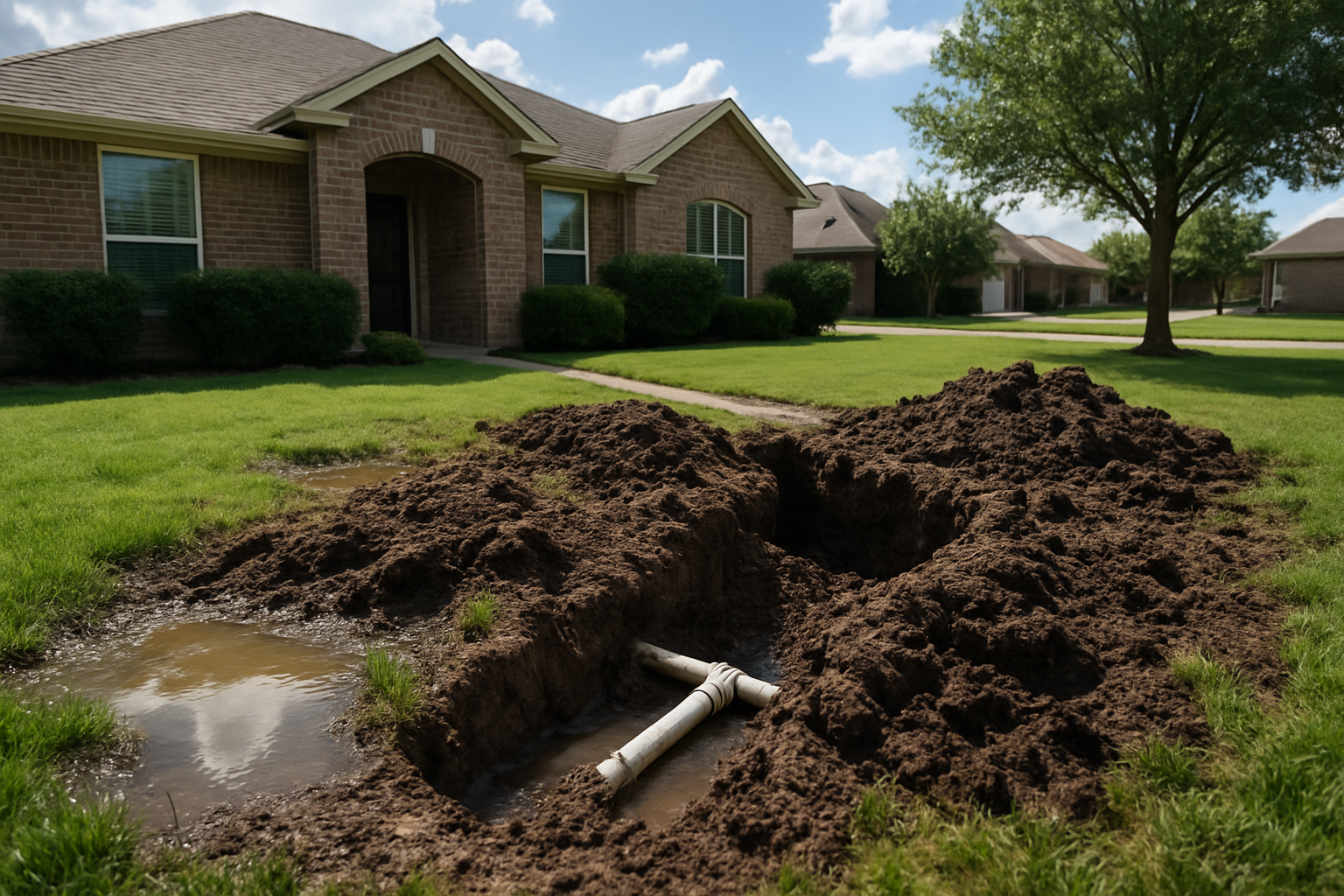
If you've spotted a soggy patch in your yard, a water bill that suddenly doubled, or a warm spot on your floor, you're probably asking the same question every Texas homeowner dreads: how much does it cost to fix a broken water pipe underground? The short answer: most underground water pipe repairs in Texas run $500 to $2,500, while a full water line replacement typically lands between $1,500 and $5,000 — and sometimes more. On a per-foot basis, broken underground pipe repairs run roughly $100 to $200 per linear foot, while replacement runs $50 to $250 per foot depending on depth, material, and access.
But here's what the national cost pages won't tell you: in Texas, the number on your quote is driven less by the pipe itself and more by where it broke and who owns it. Expansive clay soil, slab-on-grade foundations, and the difference between your private service line and the city's main all move the price dramatically. This guide breaks down real costs by repair type, explains the one question everyone secretly asks — "is this on me or the city?" — and tells you exactly what to do right now if water is running where it shouldn't be.
Quick answer: typical underground water pipe repair costs in Texas
Yes, plumbers absolutely fix underground pipes — it's a routine job for a licensed residential plumber. Here's a realistic range for what you'll pay in Texas, based on current 2026 pricing data:
- Minor spot leak repair: $500–$1,300
- Section replacement (a few feet of pipe): $600–$2,500
- Full service line replacement (street to house): $1,500–$5,000+
- Under-slab pipe repair: $1,500–$4,000+ (higher if concrete must be cut)
For context, repairing a main water line runs from about $350 to $1,700 with an average near $1,000, and replacement averages around $1,700 but climbs quickly with length and difficulty. The wide spread is real — each repair is different because there is no standardized price, and location on your property is one of the biggest variables.
Cost breakdown by repair type
Spot leak repair
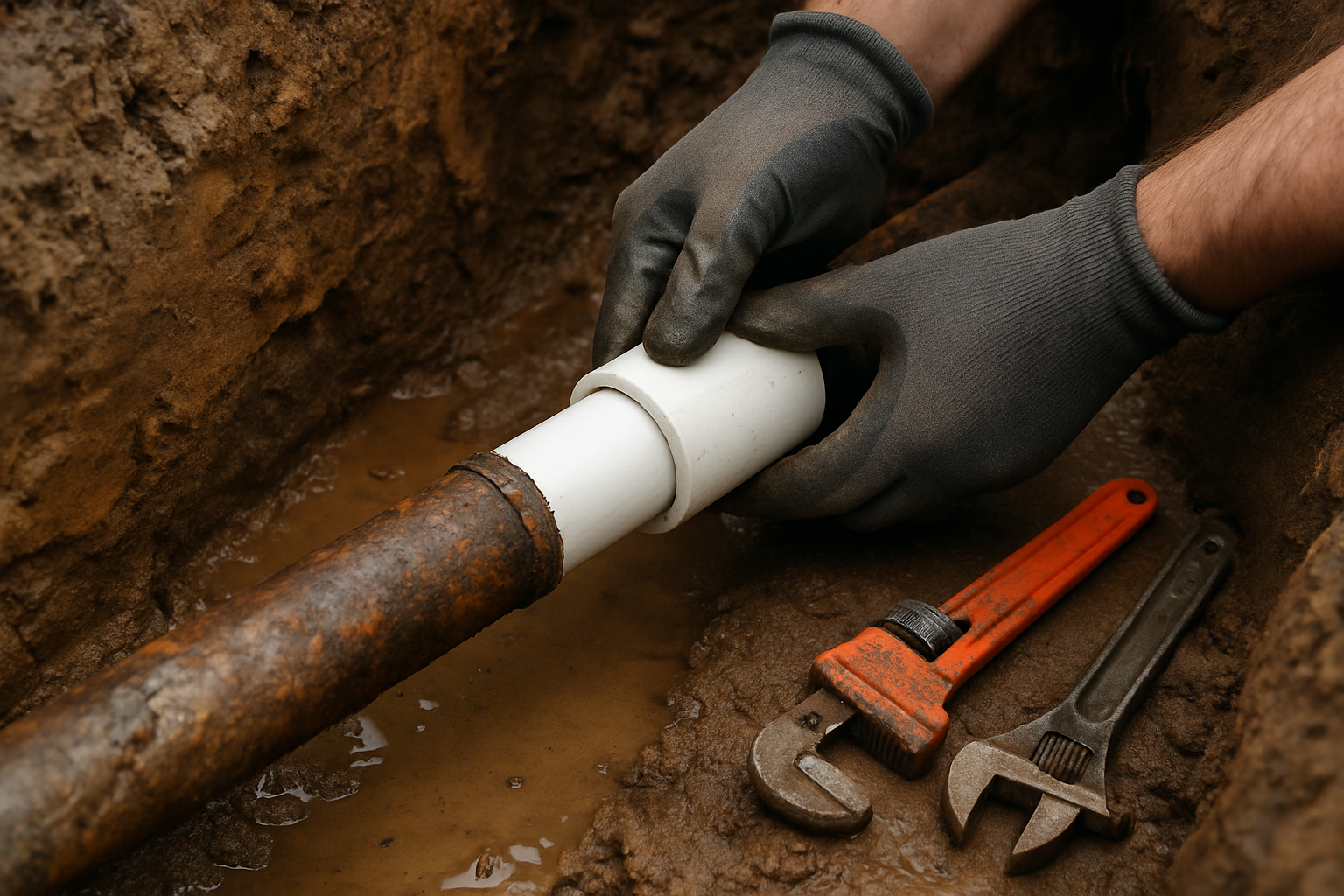
A single pinhole leak or a cracked joint in an accessible spot is the cheapest fix. If the break is shallow and in open yard, a plumber can excavate, cut out the bad section, and splice in new pipe in a few hours. Expect $500–$1,300 for a straightforward spot repair, plus a diagnostic or leak-detection fee.
Section replacement
When corrosion or shifting soil has damaged a run of pipe, your plumber replaces that stretch rather than a patch. As a rough guide, replacing about 5 feet costs $250–$750, while 25 feet runs $1,250–$3,750. In Texas, expect to lean toward the higher end when the run crosses hardscape or lies under a driveway.
Full line replacement
If the pipe is old, badly corroded, or damaged along most of its length, replacing the entire service line is the smarter long-term play. This is where costs stretch to $5,000 or beyond, particularly when the line is long or buried deep.
Under-slab repair
This is the Texas special. Because so many homes here are built slab-on-grade, a broken pipe can sit directly beneath concrete. Reaching it may require cutting through the slab and flooring, which adds significant labor. This constant lifting and settling of clay soil creates uneven pressure on plumbing connections, potentially leading to leaks and costly water damage. We cover the trenchless alternative that can spare your slab further down.
What drives the price: depth, length, soil, access, and slab vs. yard
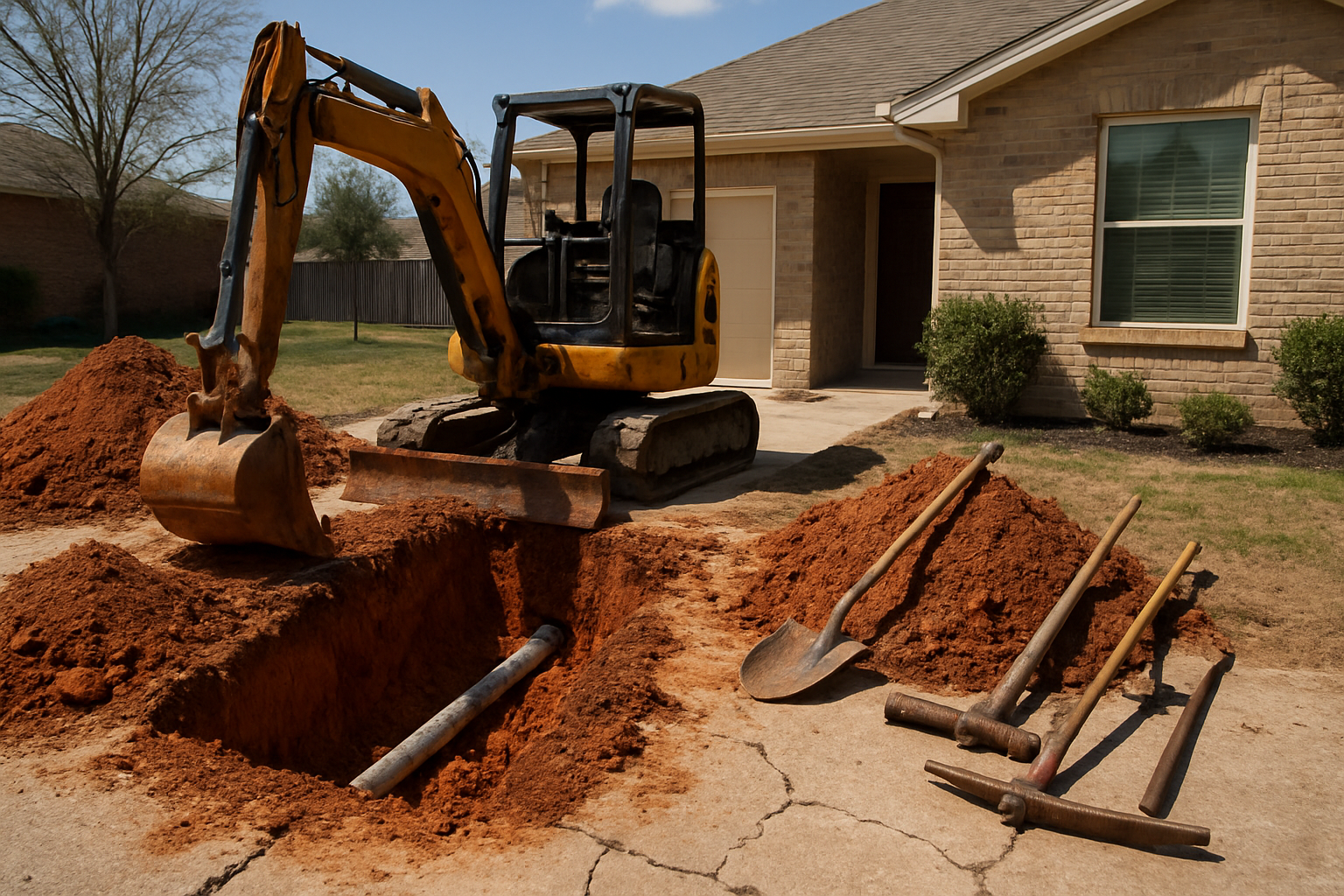
Two identical broken pipes can generate wildly different bills. Here's what moves the needle:
- Depth. Deeper pipes mean more digging, more time, and heavier equipment. How deep the pipe sits is a significant cost trigger — deeper excavation requires more time, labor, and specialized equipment. Most Texas water lines sit 1–3 feet down, shallower than in freeze-prone northern states.
- Length. A longer damaged run means more pipe and more labor, plainly.
- Soil. Texas is dominated by expansive clay. The Dallas-Fort Worth metroplex, San Antonio, Austin, and Waco are among the most affected regions in the U.S., and Texas has more foundation problems per capita than almost any other state. That same shrink-swell soil that cracks foundations also stresses and separates buried pipes.
- Access. A pipe in open lawn is cheap to reach. A line under a driveway, sidewalk, or patio adds restoration costs — driveway repair alone can run $600 to $3,000.
- Slab vs. yard. A yard leak is straightforward excavation. An under-slab leak may require cutting concrete, which raises both cost and disruption.
- Permits. Budget $150 to $500 for permits plus landscaping restoration. A licensed Texas plumber pulls these permits for you.
Repair vs. replace: when patching costs you more
Should you repair or replace a broken underground water line? A single, isolated break in otherwise sound pipe is worth repairing. But if you're on your third leak in two years, or the pipe is old galvanized steel or corroded copper, patching becomes a money pit. Repairs make sense for smaller fixes like a leaky valve or a short cracked section, but replacing the whole line is smarter when a significant portion is damaged or the line is near the end of its lifespan.
In Texas, aging cast iron and copper lines take a beating from mineral-heavy water and constant soil movement. If your plumber's camera inspection shows widespread corrosion or multiple joint separations, replacement usually costs less over five years than a string of repairs. The same repair-vs-replace math applies to aging fixtures — the logic we walk through in our guide on whether to replace a 20-year-old water heater is exactly the calculus here.
Who pays — homeowner responsibility vs. the city
This is the question buried in every search, and most cost pages leave it vague. Here's the clear answer: responsibility follows ownership, and the dividing line is the water meter or curb stop.
The utility owns and maintains the public water main under the street and the pipe up to the meter or curb stop. The homeowner is financially and legally responsible for the private service line running from the curb stop or meter to the house — and standard home insurance typically does not cover it. For Texas specifically, the city covers the water meter and the line leading up to it, while the homeowner maintains any portion of the water line past the meter — and that general rule holds across most Texas municipalities.
The trap: a water line can be underground and out of sight, but that does not automatically make it the city's responsibility. If the leak feeds your property alone and sits past the meter, it's on you. When in doubt, call your local water utility first — they can tell you which side of the meter the leak is on before you hire anyone.
Is underground pipe repair covered by homeowners insurance?
Usually not. Standard homeowners policies do not cover main water line breaks or the resulting damage, because carriers treat this as wear and tear rather than sudden, accidental damage. The workaround: many insurers sell an optional service line endorsement for a few dollars a month that covers exterior line failures from age, corrosion, or soil movement. If you own an older Texas home on clay soil, that rider is worth a phone call to your agent.
Trenchless vs. traditional dig: cost and disruption
Here's the option most ranking pages ignore. Instead of jackhammering your slab or trenching your whole yard, trenchless repair fixes the pipe through one or two small access points.
- Traditional (open trench): $50–$250 per linear foot, plus landscaping, driveway, and slab restoration. Best for full replacements or tight spots.
- Trenchless (pipe bursting or lining): roughly $75–$150 per linear foot for the pipe work itself.
Trenchless often costs more per foot for the work alone, but you frequently come out ahead because it requires little to no landscaping or hardscaping repair — making it the preferred method in most cases. For under-slab Texas homes, this can mean the difference between a torn-up living room and a tidy repair. If your leak is beneath the foundation, our deep-dive on fixing a slab leak without digging walks through your trenchless options in detail.
Signs your underground pipe is broken — and what to do right now
Underground leaks hide well, so watch for these red flags:
- A sudden, unexplained spike in your water bill
- Persistently soggy or unusually green patches in the yard
- Low water pressure throughout the house
- A warm spot on the floor (points to a hot-water slab leak)
- The sound of running water when everything is off
- New cracks in drywall or foundation
What to do right now:
- Shut off your main water valve to stop the loss and limit damage.
- Call your water utility to confirm whether the leak is on the city's side of the meter.
- Call a licensed, insured plumber for leak detection if it's on your side.
- Document everything with photos in case insurance or a service-line plan applies.
This is exactly where a 24/7 emergency plumber earns their keep. TruFlo Plumbing offers round-the-clock emergency service for Texas homeowners, with licensed, insured technicians and over 15 years of experience diagnosing hidden underground and slab leaks. Because leaks under Texas clay only get more expensive the longer they sit, fast, accurate leak detection is the single best way to keep your bill down. You can read more about that process in our guide to leak detection and repair costs.
How to hire a licensed plumber and read an underground repair quote
Underground work is not a DIY job — it's illegal in some municipalities to work on the main line yourself, and you risk damaging the pipe further by digging blind. When you hire, insist on:
- A Texas plumbing license and proof of insurance — non-negotiable for underground and slab work.
- A camera or acoustic leak-detection inspection before any digging, so you're paying to fix the actual problem.
- A written, itemized quote separating diagnostics, labor, materials (per foot), permits, and restoration.
- Clarity on repair vs. replace — a trustworthy plumber explains why, not just how much.
- Permit handling — the plumber should pull required permits, not leave that to you.
A quote that lumps everything into one round number is a red flag. A good one shows exactly where your money goes. That transparency is the same standard we apply to every job — including smaller ones like installing a new toilet or a kitchen faucet replacement.
The bottom line — and how to get help fast
Most underground water pipe repairs in Texas cost $500 to $2,500, with full replacements reaching $5,000 or more — but the real cost depends on depth, soil, access, whether it's under your slab, and which side of the meter the break sits on. Confirm ownership with your utility, ask about a service-line insurance rider, and never let anyone dig before they've pinpointed the leak.
When you need honest answers and a fair, itemized quote, reach out to TruFlo Plumbing. With 24/7 emergency service, licensed and insured technicians, and 15+ years fixing Texas underground and slab leaks, TruFlo is the plumber to call the moment you suspect a broken line — before a small leak turns into a foundation problem. Get in touch at truflotx.com for fast, transparent underground water pipe repair.
Frequently asked questions
How much does it cost to fix a busted pipe underground?
Most underground pipe repairs in Texas cost $500 to $2,500, or roughly $100 to $200 per linear foot for the broken section. A full service line replacement runs $1,500 to $5,000 or more. Depth, soil, access, and whether the pipe is under a slab all affect the final price.
Do plumbers fix underground pipes?
Yes. Repairing and replacing underground water lines is a standard job for a licensed residential plumber, using either traditional excavation or trenchless methods. Because underground work often requires permits and specialized equipment, it should always be handled by a licensed, insured pro rather than a DIY attempt.
Who pays for water line repair — me or the city?
Responsibility follows ownership. The city maintains the public main and the line up to your water meter or curb stop, while you're responsible for the private service line from the meter to your house. Call your water utility first to confirm which side of the meter the leak is on before hiring anyone.
How much per linear foot to repair an underground water line?
Broken underground pipe repairs typically run $100 to $200 per linear foot. Full replacement costs $50 to $250 per foot depending on the method, with trenchless work generally $75 to $150 per foot. Access issues like driveways or slabs push costs toward the high end.
Is underground pipe repair covered by homeowners insurance?
Usually not. Standard policies treat underground line failure as wear and tear, which is excluded. Many insurers offer an optional service line endorsement for a few dollars a month that does cover exterior line failures from age, corrosion, or soil movement — worth adding if you own an older Texas home.
How long does it take to repair an underground water pipe?
Most straightforward underground repairs take a few hours to a single day. A full line replacement can take a couple of days, especially if the crew must cut concrete or restore hardscaping. Trenchless methods are often faster because they avoid large-scale excavation.
Should I repair or replace a broken underground water line?
Repair a single, isolated break in otherwise sound pipe. Replace the line if it's old, badly corroded, or you've had repeated leaks — repeated patching usually costs more over time. A camera inspection from a licensed plumber is the best way to decide.
Leave your details and a real person will get back to you — usually within one business day.