Cost to Replace a Kitchen Faucet with a Plumber (2025 Texas Guide)

Replacing a kitchen faucet sounds like a five-minute job — until you're wedged under the sink wrestling a corroded shut-off valve that won't budge. If you're a Texas homeowner searching for real numbers, here's the plain answer: most licensed plumbers in Texas charge $150 to $350 in labor to replace a standard kitchen faucet, and with a mid-range faucet included, total project costs typically land between $220 and $600. One 2025 Houston cost estimate puts the all-in range at between $220 and $592 per faucet, which lines up closely with what our own crews quote across Texas.
That range moves based on your faucet, the condition of what's under your sink, and how easy the space is to work in. A simple swap of a matching single-handle faucet is quick and cheap; a job that turns into replacing seized valves, drilling new mounting holes, or fixing a hidden leak costs more. Below, TruFlo Plumbing breaks down exactly where your money goes, what drives the price up or down, and when hiring a licensed plumber genuinely beats a handyman or a DIY afternoon.
Quick answer: average cost to replace a kitchen faucet in Texas
Here's a realistic Texas breakdown for a standard residential kitchen faucet replacement:
- Labor only (plumber): $150–$350 for a straightforward swap
- Mid-range faucet: $100–$350
- Total (labor + faucet + basic supplies): roughly $220–$600
- Complex jobs (corroded valves, new holes, tight access): $400–$800+
National data backs this up. HomeGuide reports that labor runs $45 to $150 per hour and faucets alone average $100 to $350, while HomeAdvisor pegs total labor for a basic installation between $260 and $480. Texas labor rates tend to sit near the middle of the national spread — higher in fast-growing metros like Austin, Dallas, and Houston, and a bit lower in smaller markets.
Cost breakdown: labor vs. faucet vs. the extras nobody mentions
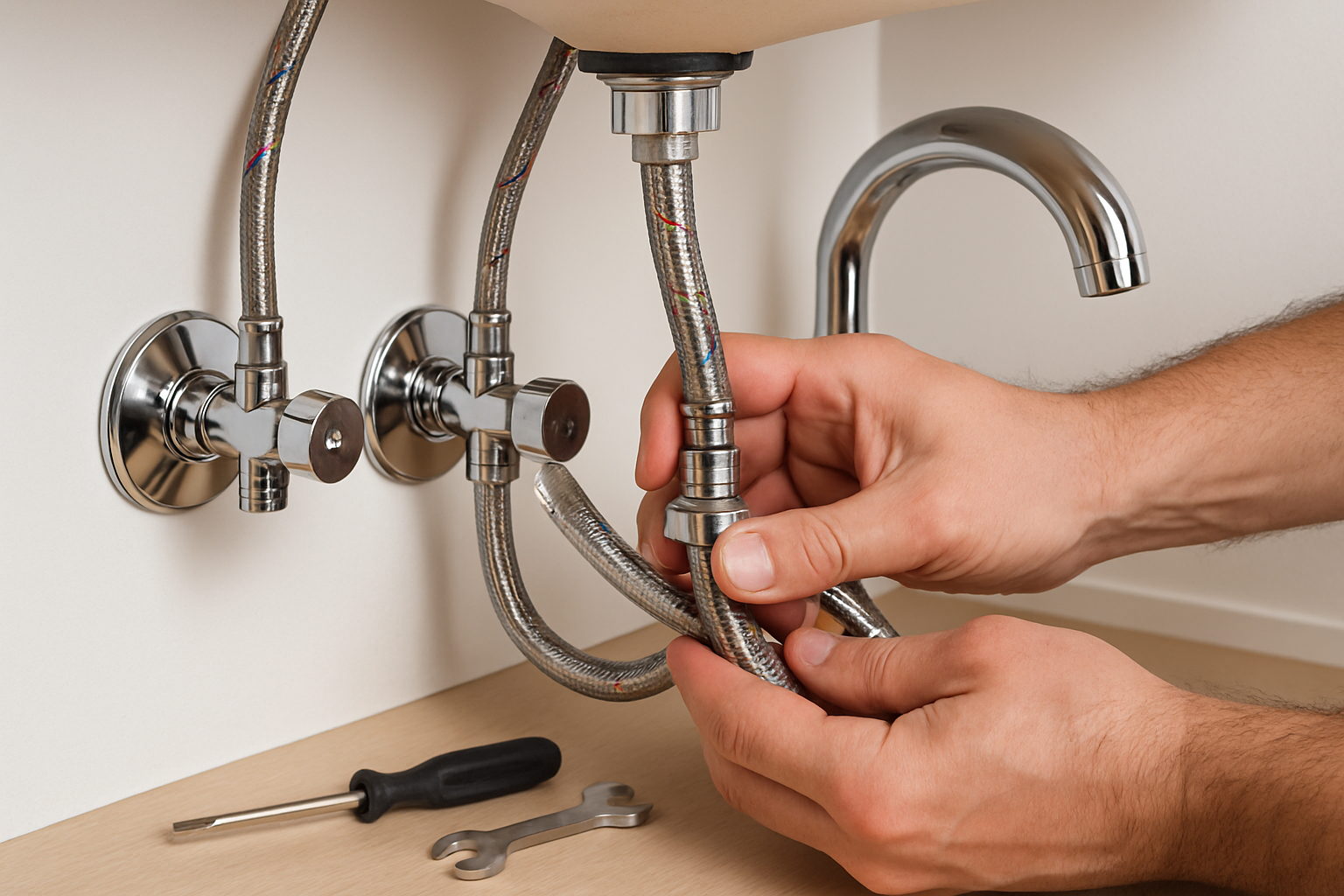
Your quote is really three things stacked together. Understanding each part helps you spot a fair price from a padded one.
Labor
This is the plumber's time and expertise. A clean, like-for-like replacement takes about an hour. Angi notes that a plumber can typically replace a kitchen faucet in 30 minutes to one hour when nothing goes sideways — which is exactly why many pros charge a flat rate rather than the clock.
The faucet itself
This is usually the biggest variable. Basic single-handle models start around $50, while pull-down sprayers, touchless sensors, and premium finishes like matte black or brushed gold climb well past $300. High-end brands such as Moen, Delta, and Kohler charge for features like touch activation and advanced spray patterns.
The extras
These are the line items homeowners forget:
- Shut-off valves — the small angle stops under your sink. Old ones seize or drip.
- Supply lines — the flexible braided hoses connecting valve to faucet. Reputable installers replace these as a matter of course.
- Old faucet removal and disposal — often adds $15 to $80 if the unit is rusted in place.
- Escutcheon/deck plates — needed when the new faucet doesn't cover the old sink holes.
What drives the price up or down
Two identical-looking kitchens can produce very different quotes. Here's why.
Old, corroded shut-off valves. This is the number-one reason a "simple" job balloons. Shut-off valves older than 15 years often seize and have to be replaced before the new faucet can even go in — a smart fix, since a valve that won't close is useless in an emergency.
Mounting holes. Your sink or countertop has a fixed number of pre-drilled holes (usually one to four). If your new faucet needs a different configuration, the plumber either installs a deck plate to cover extras or — rarely — drills new holes. Retailers like Home Depot won't drill countertops at all (more on that below).
Under-sink access. A cramped cabinet, a garbage disposal in the way, or a deep farmhouse sink all add time. Tight, older cabinets slow the work and can nudge labor higher.
Faucet complexity. Single-piece units are fastest. Pull-down sprayers, touchless models with sensors, and add-ons like soap dispensers or filtered-water taps all require more time and sometimes an electrical outlet or battery housing.
Plumber vs. handyman vs. DIY: which is right for you?
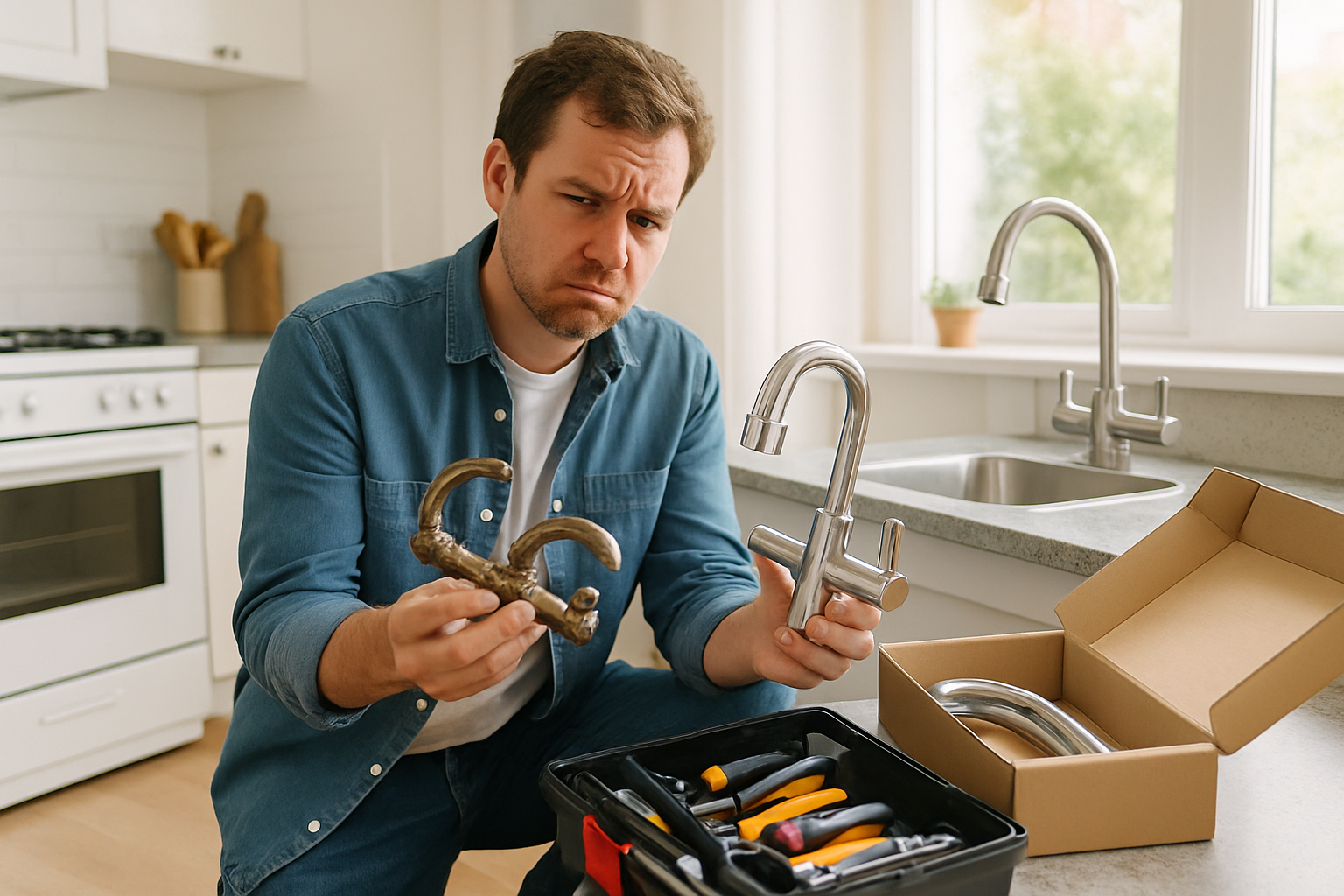
This is where honest guidance matters most, because the "cheapest" option isn't always the smartest.
DIY
If you're only removing an old faucet and dropping in a matching replacement — and the shut-off valves work — this is doable. DIY can save $100 to $200 in labor, but the same source warns that mistakes can lead to leaks, water damage, or stripped fittings that cost more to fix later. You'll also need a basin wrench and a bucket, at minimum.
Handyman
A handyman can handle a basic swap when the water lines stay untouched, usually for less than a plumber. The catch: handymen are typically not licensed or insured and can only handle basic replacement jobs. If they crack a valve or a supply line fails, you may have no warranty and no coverage.
Licensed plumber
Bring in a licensed pro when the job involves anything beyond a clean swap. HomeAdvisor advises that if the project calls for moving supply lines, changing valves, or drilling new holes, you want a licensed plumber who knows local code and how to prevent leaks. A pro also spots problems a handyman would miss — and protects your faucet's manufacturer warranty, which can be voided by improper installation. If you're weighing your options, our guide on how to choose a licensed, insured plumber in Texas walks through exactly what to verify.
How much does Home Depot charge for kitchen faucet installation?
Retailer installation is a popular middle option, but read the fine print. Home Depot faucet installation starts around $119, and Home Depot's own service page lists an average of $195, typically ranging $97 to $369. Two important exclusions are easy to miss:
- They won't drill countertops or modify cabinets to fit your new faucet.
- They generally only install faucets purchased from Home Depot, and disposal or extra parts can add to the base price.
That "starting" price also assumes everything under your sink is in good shape. The moment a corroded valve shows up, you're back to needing a plumber anyway — sometimes after already paying the retailer's subcontractor.
How long the job takes and what to expect
A standard TruFlo faucet replacement follows a predictable rhythm:
- Shut off the water at the under-sink valves and test that they hold.
- Disconnect and remove the old faucet and supply lines.
- Inspect valves, connections, and the sink deck for corrosion or leaks.
- Mount and seal the new faucet, connect fresh supply lines.
- Turn the water back on, check for leaks, and test hot/cold flow and handle movement.
Plan on about one hour for a clean swap, and up to two or three hours if valves, supply lines, or drain work come into play. A tidy pro also cleans up, hauls away the old faucet, and shows you where your shut-offs are before leaving.
Red flags and questions to ask before you hire
Trust is where most cost guides go silent — so let's not. Before anyone touches your sink, confirm:
- Are you licensed and insured? In Texas you can verify any plumber for free through the Texas State Board of Plumbing Examiners license verification tool. A legitimate pro will give you a license number without hesitation.
- Is this a flat rate or hourly? Flat-rate pricing protects you if the job runs long; hourly can be fine but ask for a not-to-exceed estimate.
- Is there a separate trip charge? Confirm whether the quoted price already includes the visit.
- Does it include removal, disposal, and new supply lines? Most reputable installers include these — get it in writing.
- Is there a labor warranty? Aim for at least a one-year guarantee on the work.
Getting a couple of estimates is smart, but don't automatically pick the lowest — the cheapest quote often means quality suffers. For a deeper checklist, see our post on what to do during a plumbing emergency before help arrives — knowing where your shut-offs are pays off long before a faucet ever fails.
How TruFlo prices faucet replacement
TruFlo Plumbing quotes faucet replacement with honest, upfront pricing — no vague hourly guesses that balloon at the end. With over 15 years of experience serving Texas homeowners, our licensed, insured team inspects what's under your sink before we commit to a number, so surprises are the exception, not the business model. If we find a seized valve or worn supply line, we tell you the cost before we touch it. And because we're a full-service residential plumber, you're not stuck if a "simple" swap uncovers something bigger.
When a faucet swap reveals a bigger problem
Pulling an old faucet is like lifting the hood on your under-sink plumbing — and sometimes what we find matters more than the faucet itself. Common discoveries include slow drips at the shut-off valves, corroded connectors, or a supply line that's been quietly weeping and rotting your cabinet base. These are exactly the kind of hidden issues covered in our guide to the 7 signs you have a hidden water leak. Catching one during a faucet job can save thousands in water damage.
If your existing faucet has been dripping for a while, it may also point to worn cartridges or valve issues worth understanding — much like the mechanics behind a toilet that runs constantly. And while a plumber is already under your sink, it's a natural time to ask about related concerns, from leak detection and repair costs to whether your pipes are ready for winter with proper freeze protection.
Frequently asked questions
How much would a plumber charge to replace a kitchen faucet in Texas?
Expect roughly $150 to $350 in labor for a standard swap, or $220 to $600 total including a mid-range faucet and basic supplies. Complex jobs with corroded valves or extra drilling can reach $400 to $800 or more. Getting an upfront, itemized quote is the best way to know your real number.
Is the labor cost different if I supply my own faucet?
Yes — buying the faucet yourself removes the installer's markup, which some retailers mark up 25% to 100%. You'll pay only for labor and any needed parts like valves or supply lines. Just make sure the faucet you buy matches your sink's hole configuration to avoid extra work.
Can a handyman change a kitchen faucet, or do I need a licensed plumber?
A handyman can handle a basic like-for-like swap when the water lines stay untouched. But handymen are usually not licensed or insured, so if the job needs new valves, supply-line work, or hole drilling, hire a licensed plumber. A pro also protects your warranty and catches hidden problems.
How long does it take a plumber to install a new kitchen faucet?
A clean, straightforward replacement typically takes 30 minutes to one hour. If shut-off valves, supply lines, or drain adjustments are involved, plan for two to three hours. Tight cabinet space and complex faucets add time.
Should the plumber also replace the shut-off valves and supply lines?
Usually yes, especially if the valves are over 15 years old or show corrosion. Old valves seize and can fail during future emergencies, and worn supply lines are a common source of hidden leaks. Replacing them during the faucet job is far cheaper than an emergency call later.
Why is my quote higher than the online average?
Online averages assume a perfect, code-compliant setup. Real homes have corroded valves, mismatched sink holes, tight access, and aging supply lines that add time and parts. A higher quote often reflects an honest inspection of your specific plumbing rather than overcharging.
Ready for a leak-free faucet?
Whether you're upgrading to a sleek pull-down sprayer or just tired of a drip, TruFlo Plumbing delivers licensed, insured, upfront-priced faucet replacement across Texas — plus 24/7 emergency service if things go sideways. Skip the guesswork and the "starting at" pricing. Contact TruFlo Plumbing today at truflotx.com for an honest quote and a faucet installed right the first time.
Leave your details and a real person will get back to you — usually within one business day.