Cost to Install a New Toilet in Texas (2025 Local Price Guide)
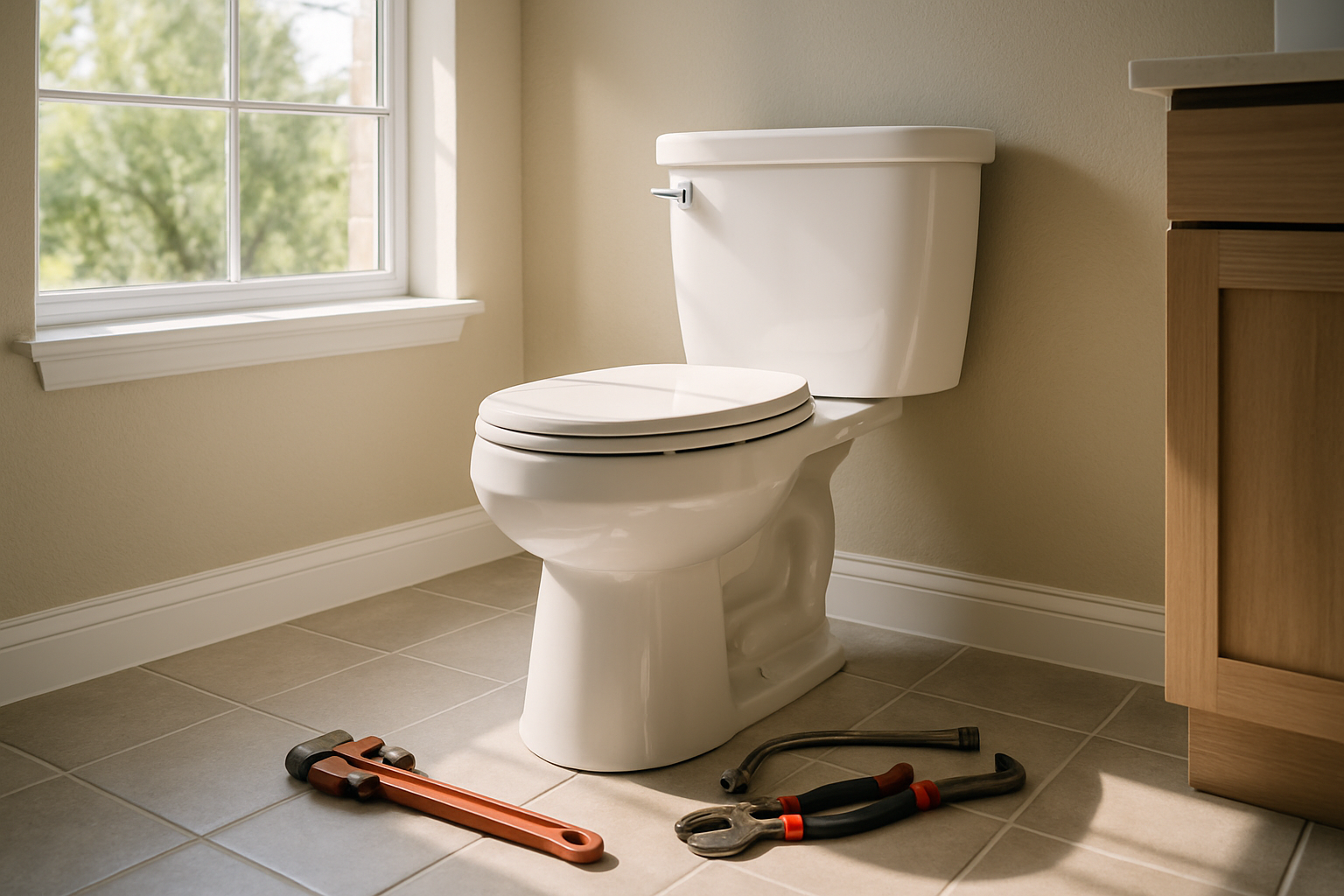
If your toilet is cracked, constantly running, or rocking on its base, the first question is usually a simple one: how much does it cost to install a new toilet near me? In Texas, expect to pay roughly $225 to $600 for a standard toilet swap when you factor in labor, a new wax ring, supply line, and hauling away the old unit — with most straightforward jobs landing around $350 to $450. The toilet itself is separate and typically runs $100 to $500 for a good two-piece model, or well over $1,000 for smart and upflush styles.
Written and reviewed by a Responsible Master Plumber at TruFlo Plumbing, licensed by the Texas State Board of Plumbing Examiners (TSBPE). Our RMP credential and insurance are verifiable through the TSBPE Public License Search. Last updated January 2025.
That range holds for a "clean" install where nothing behind the wall or under the floor surprises you. The national calculators like Homewyse, Thumbtack, and Home Depot quote generic averages that ignore Texas labor rates and the add-ons that inflate a real bill. As a licensed local plumber, TruFlo Plumbing put together this guide to show you exactly what drives the price up or down here in Texas — including the flange, valve, and subfloor costs the big-box quotes tend to bury.
Quick answer: typical toilet installation cost in Texas
Here's a realistic breakdown by scenario. These figures reflect Texas labor, where plumbers commonly charge between $45 and $150 per hour for standard work, plus a service call fee that often runs $50 to $100.
- Standard swap (labor only): $150–$450. A straightforward replacement — remove old toilet, set new one, new wax ring and supply line, test.
- Standard swap including a mid-range toilet: $350–$800 all-in. Nationally, toilet installation averages $350 to $800 for the unit plus plumbing labor.
- Toilet with minor complications (old flange, corroded valve): add $75–$250.
- One-piece or premium two-piece install: $400–$900 all-in.
- Smart / bidet toilet install: $1,000–$2,500+ (electrical outlet often required).
- Upflush / macerating toilet: $1,000–$2,500+ all-in (the unit alone is pricey).
- Relocating a toilet (new drain/vent lines): $1,500–$3,000+.
Cost table: toilet installation scenarios in Texas (2025)
| Scenario | Toilet (unit) cost | Labor | Total all-in |
|---|---|---|---|
| Standard two-piece swap | $100–$500 | $150–$450 | $350–$800 |
| Swap + old flange/valve fix | $100–$500 | $225–$700 | $425–$1,050 |
| One-piece / premium swap | $200–$900 | $200–$500 | $400–$1,400 |
| Smart / bidet toilet | $600–$1,800 | $400–$900+ | $1,000–$2,500+ |
| Upflush / macerating | $750–$1,500 | $300–$1,000 | $1,000–$2,500+ |
| Relocating a toilet | $100–$900 | $1,400–$2,500+ | $1,500–$3,000+ |
City price breakdown: Houston, Dallas, Austin & San Antonio
Labor is the biggest local variable. Wage data shows Texas metros running slightly above the state average, with Dallas plumbers averaging about $31.47 per hour and Houston plumbers around $30.59 per hour in recent postings. Industry data also notes that Houston tops Texas cities for plumber pay, with Dallas, Austin, and San Antonio all running above the statewide figure. The table below reflects typical all-in pricing (labor plus a mid-range toilet) for a standard swap in each metro.
| City | Standard swap (labor only) | All-in with mid-range toilet | Notes |
|---|---|---|---|
| Houston | $175–$475 | $375–$850 | Highest plumber pay in TX; wide range by neighborhood |
| Dallas | $175–$475 | $375–$850 | Strong demand across DFW pushes rates up |
| Austin | $185–$500 | $400–$900 | Highest cost of living; premium labor |
| San Antonio | $150–$425 | $350–$775 | Often the most affordable of the four metros |
For broader context, HomeAdvisor puts the average install between $224 and $533 or more, and notes that the average labor cost for professional installation is about $373. Texas tends to sit near or slightly below the national average, but big metros run higher due to demand and cost of living.
First-party data: a recent Texas job ticket
National aggregators can't show you a real bill. Here's an anonymized, itemized ticket from a recent standard TruFlo toilet replacement in a Houston-area home (customer supplied a mid-range 1.28-GPF two-piece toilet):
- Service call / diagnostic: $79
- Labor — remove & set new toilet, test: $220
- New wax ring & closet bolts: $18
- New braided steel supply line: $14
- Replace corroded angle-stop shut-off valve: $48 (parts) + $65 (labor)
- Haul-away & disposal of old unit: included
- Job total (labor + parts, toilet not included): $444
That ticket is a textbook example of how a "$300 swap" becomes a $444 job once a decades-old shut-off valve won't reseal — a line item most online calculators never mention.
What's actually included in the price
A fair toilet-install quote is more than "set the bowl." When you hire a licensed plumber, the labor line should cover the full swap. The process starts with disconnecting the water and draining and removing the old toilet, then the plumber sets the new toilet, reconnects the water, and tests it to confirm there are no leaks or rocking.
The typical parts and services bundled into a professional install include:
- The wax ring or rubber seal — the critical gasket that prevents leaks at the floor. A wax ring or rubber seal costs $5 to $20 but is essential for a proper install.
- A new water supply line — a braided flex hose. If the existing supply line is damaged, replacing it runs about $10 to $30.
- Mounting/floor bolts and gaskets — usually included with the new toilet.
- Removal and disposal of the old toilet. Pros charge $50 to $200 to pull and haul away the old unit, though many bundle disposal into their flat labor rate.
Keep in mind the fixture itself is a big share of the total. The cost of the toilet can account for up to 50% of the total installation price, which is why the model you choose matters as much as the labor.
Cost factors that change your quote
Two "toilet installs" can be priced very differently. Here's what moves the needle:
Toilet type
A two-piece toilet costs $100 to $500 on average before installation, while a one-piece runs $200 to $900. One-piece models are heavier and a bit more awkward to set. Smart and wall-mounted toilets add the most labor.
Upflush and smart toilets
If there's no drain where you want a toilet — a garage, a bonus room, a basement-style build — an upflush (macerating) toilet grinds waste and pumps it to your main line. An upflush or macerating toilet costs $750 to $1,500 before labor, so the all-in price climbs quickly. Smart toilets need a nearby GFCI outlet, which can mean an electrician.
Floor and flange condition
An old, cracked, or corroded flange is the single most common surprise. So is a soft spot in the subfloor from a slow, long-term leak — something we cover in our guide to 7 signs you have a hidden water leak.
Hard-to-reach or upper-floor installs
Ground-floor installations cost the least; upper-level or hard-to-reach spots run higher because of the extra time and maneuvering.
Texas licensing: why an unlicensed handyman is a real risk
This matters more in Texas than most national guides admit. The Texas State Board of Plumbing Examiners (TSBPE) is the state agency responsible for licensing plumbers, and it issues four license types: Tradesman Plumber-Limited, Journeyman, Master, and Plumbing Inspector. Critically, anyone who contracts plumbing work directly with the public must hold a Responsible Master Plumber (RMP) designation and carry required insurance.
A handyman who touches your drain and supply lines without proper licensing is operating outside that framework. Performing plumbing work without the required license can lead to administrative penalties, fines, and enforcement action by the TSBPE, and it can create serious problems with inspections, permits, and payment disputes. On top of the regulatory exposure, unlicensed work often voids the toilet manufacturer's warranty and won't be backed by a licensed labor warranty — so if that wax ring leaks into your subfloor six months later, you're on your own.
Plumber vs. Home Depot/Lowe's vs. handyman
This is where the "cheapest" option often isn't. Here's the honest comparison:
Big-box stores (Home Depot, Lowe's)
Home Depot and Lowe's both offer toilet installation, but they don't send their own staff. Home Depot does not hire installers; it subcontracts the work to local plumbers and contractors. Advertised install rates typically run in the $115 to $400 range — but that's the sticker, not the total. Big-box stores advertise installation between roughly $185 and $400, but these often exclude flange repairs and disposal fees, so real-world costs can range $250 to $800 per toilet.
Does Home Depot install toilets for free with purchase? No. There's no free-with-purchase toilet install — you pay a separate labor charge. The toilet and installation parts like the wax ring, supply line, and floor bolts are not included in the install price, so the customer provides them, and electrical work and drain repair also cost extra. The upside: Home Depot will remove and dispose of the old toilet as part of the service.
Handyman
A handyman may charge the least up front for a simple swap. The risk is that a handyman isn't a licensed plumber — so if a flange, valve, or subfloor problem appears mid-job, they may not be able (or licensed) to fix it correctly, and you inherit the permit and warranty exposure described above. Improper wax-ring seating is the classic result of a rushed swap.
Licensed local plumber (recommended)
Hiring a licensed plumber directly usually costs about the same as the big-box subcontractor route — because it's often the same tier of tradesperson, just without the middleman markup. The difference: your plumber can diagnose and fix flange, valve, or subfloor issues on the spot, warranties the whole job, and pulls any permit code requires. That's why we recommend TruFlo Plumbing for Texas homeowners who want the job done once, correctly, with one accountable party. Hiring a professional plumber ensures the toilet is installed correctly and complies with local codes, and pros can handle unexpected issues like plumbing adjustments or underlying problems.
Hidden costs homeowners get surprised by
These are the line items national calculators gloss over — and the reason a "$200 install" becomes a $500 bill:
- Corroded shut-off valve. The old angle stop under the toilet often won't seal after being turned for the first time in years. Replacing it is quick but adds a parts-and-labor charge.
- Broken or corroded flange. A corroded flange replacement runs about $40 for parts plus roughly $170 to $550 in labor depending on how it's mounted.
- Subfloor rot. A long-running leak can rot the wood under the toilet. This must be repaired before the new toilet is set, or it'll rock and leak again.
- Code upgrades. Older homes sometimes need a supply-line or valve upgrade to meet current code during a fixture change.
Many of these trace back to leaks that went unnoticed. If you suspect one, our guide to leak detection and repair costs explains what that inspection involves.
Signs you need a full replacement vs. a repair
Not every toilet problem means a new toilet. Replace when it makes financial sense; repair when it doesn't:
- Replace if the tank or bowl is cracked, the toilet wobbles from a failing flange, it needs constant repairs, or it's an old 3.5+ gallon-per-flush model wasting water.
- Repair if it's just running, a flapper is worn, or the fill valve is noisy — often a cheap fix. Our article on why a toilet runs constantly walks through those cases.
Replacing often saves money when repair costs stack up or when a modern 1.28-GPF toilet cuts your water bill. The math usually favors replacement once you're pouring money into a two-decade-old fixture.
How to choose a licensed, insured installer
Before you pay anyone, ask these questions:
- Are you licensed and insured in Texas? Toilet installs tie into your drain and water supply — licensing protects you, and you can verify any RMP directly through the TSBPE. Our full checklist on choosing a licensed, insured plumber in Texas covers what to verify.
- Is the quote flat-rate or hourly, and what does it include? Find out whether the rate is hourly or fixed so there are no surprises on the bill.
- Does the price include haul-away of my old toilet? Confirm disposal is bundled.
- What happens if you find a bad flange or subfloor? A good plumber explains the add-on cost before proceeding, not after.
- Do you warranty the work? Get the labor warranty in writing.
Getting at least three quotes gives you a sense of the average rate in your area — just compare what's actually included, not only the headline number.
Get a free local quote from TruFlo Plumbing
National calculators can't see your bathroom — the age of your flange, the condition of your shut-off valve, or that soft spot under the tile. A licensed local plumber can. TruFlo Plumbing is a licensed, insured, residential-focused team with over 15 years of experience serving Texas homeowners, and we offer 24/7 emergency service for the times a cracked or overflowing toilet can't wait. If your toilet is failing right now, our checklist on what to do during a plumbing emergency before help arrives can help you limit the damage until we get there.
Whether it's a straightforward swap or a job that turns up a corroded flange or subfloor surprise, we quote honestly, haul away the old unit, and stand behind the work. Contact TruFlo Plumbing today for a free local quote and get your new toilet installed right the first time.
Frequently asked questions
How much should a plumber charge to install a new toilet in Texas?
For a standard swap, expect roughly $150 to $450 in labor, or about $350 to $800 all-in with a mid-range toilet included. Texas plumbers generally charge $45 to $150 per hour plus a $50 to $100 service call fee, and a basic install takes only an hour or two.
How long does toilet installation take?
A standard replacement takes about one to two hours. Complications like a corroded flange, a bad shut-off valve, or subfloor repair can extend it, and specialty installs such as upflush or wall-mounted toilets take significantly longer.
Does Texas require a permit to replace a toilet?
Generally, no — not for a like-for-like swap. Per guidance from the Houston Permitting Center, replacing an existing toilet with another toilet does not require a permit, though homeowners doing the work themselves still must follow code. A permit is typically required once you relocate a toilet or add a new fixture, because that alters the drain and vent lines. Always confirm with your local city permitting office, since rules vary by jurisdiction.
What is the cheapest toilet installation option in Texas?
The lowest up-front cost is usually DIY (about $20 in parts plus the toilet) or a handyman for a simple swap — but both carry the biggest risk. In Texas, unlicensed work can void warranties and create permit and inspection problems, so a leak or rocking bowl can turn "cheapest" into the most expensive option. For a low-risk low cost, a licensed plumber doing a straightforward swap with a budget two-piece toilet typically lands around $350–$450 all-in, and San Antonio tends to run slightly cheaper than Houston, Dallas, or Austin.
Is Home Depot or Lowe's cheaper than a plumber for toilet installation?
Not usually, once you account for add-ons. Both stores subcontract the work to local plumbers and advertise rates around $115 to $400, but that excludes parts, disposal complications, flange repairs, and electrical work. Hiring a licensed plumber directly often costs about the same while removing the middleman and giving you one accountable party.
Is it cheaper to install a toilet myself or hire a plumber?
DIY saves the labor cost — your main expenses are the toilet and about $20 for a wax ring and bolts. The risk is real, though: a misaligned wax ring can cause leaks and water damage that lead to a far bigger repair bill, and a meaningful share of DIY installs need a plumber within months due to leaks or rocking.
Does the price include hauling away my old toilet?
Usually, yes. Most plumbers bundle removal and disposal into the labor charge, and pros typically charge $50 to $200 to pull and haul away an old unit if it's itemized separately. Always confirm haul-away is included when you get your quote.
How much more does a smart or upflush toilet cost to install?
Considerably more. An upflush (macerating) toilet unit alone runs $750 to $1,500 before labor, pushing all-in costs to $1,000 to $2,500 or higher. Smart toilets add cost too, since they typically require a nearby GFCI electrical outlet, which may mean bringing in an electrician.
Leave your details and a real person will get back to you — usually within one business day.